Sustainable mobility: the Department of Energy’s contribution to the third Report of the SUNRISE Observatory
In the third Report of MOST’s SUNRISE Observatory, Matteo Rocco and Debora Ghezzi of the SESAM group present a study on vehicle life cycles and the environmental impact of different powertrain technologies
How much do different automotive technologies really contribute to greenhouse gas emissions? And how does the comparison between electric and combustion-engine vehicles change when we consider not only their use, but their entire life cycle?
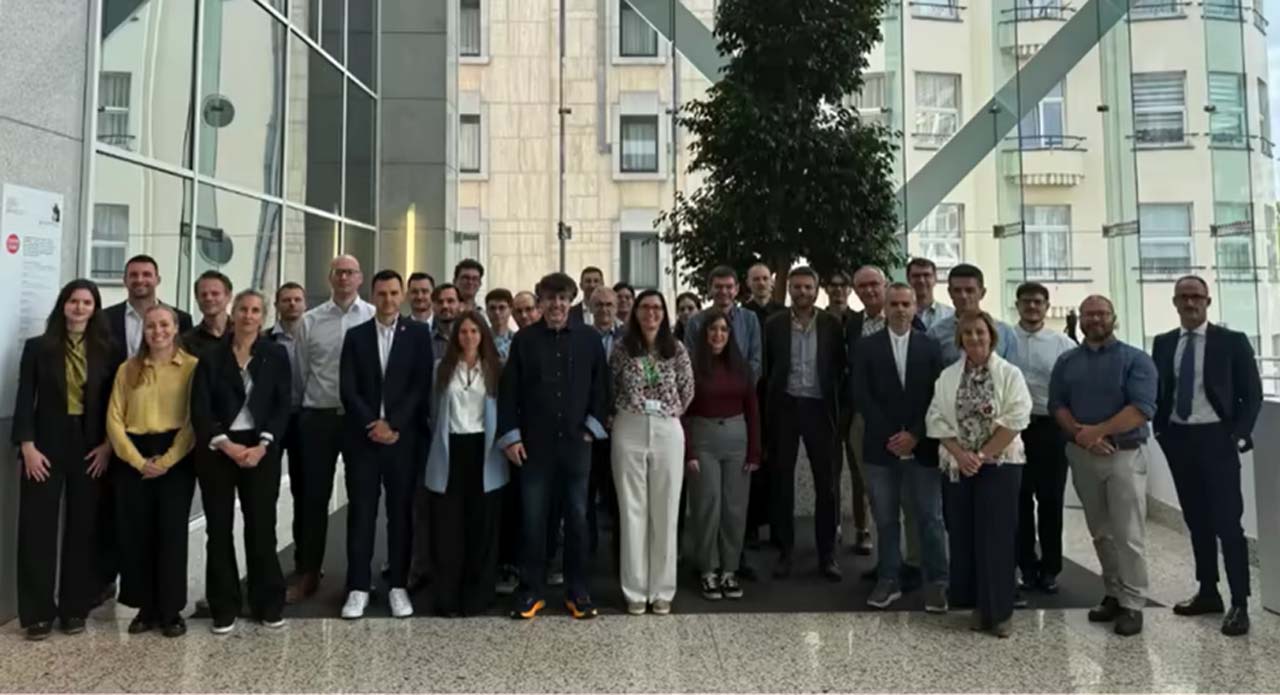
These are some of the questions addressed in the contribution by Matteo Rocco and Debora Ghezzi, from the Sustainable Energy System Analysis and Modelling (SESAM) research group at the Department of Energy of Politecnico di Milano. The study was presented on 27 October 2026 in Milan, at the presentation of the third Report of the SUNRISE Observatory of MOST – National Centre for Sustainable Mobility.
The event brought together researchers, institutions and industry representatives to explore the evolution of road mobility in Italy, focusing on emissions, transport technologies and decarbonisation scenarios.
Car emissions: why it is important to consider the entire life cycle
The study conducted by the Department of Energy researchers compared 21 combinations of powertrain and vehicle size, assessing the carbon footprint per kilometre travelled using a Life Cycle Assessment (LCA) approach.
The analysis considers not only emissions associated with the production and use of the energy required to operate the vehicle (Well-to-Wheel), but also those generated by the car’s manufacture, maintenance and end-of-life management.
The results show that using a Well-to-Wheel approach alone underestimates the carbon footprint by 10–20% for combustion-engine vehicles and by around 100% for electric vehicles, compared with values calculated across the entire life cycle. Of the emissions associated with vehicle life-cycle stages other than the production and use of energy, approximately 95% come from manufacturing.
Scenarios for 2034 and the decarbonisation of road transport
The analysis also assesses how the carbon footprint of Italy’s vehicle fleet (in Mton of CO2 equivalent) changes under scenarios for the expected evolution of vehicle types, sizes and mileage by 2034.
According to the results, the overall carbon footprint calculated using a Well-to-Wheel approach ranges from a 1% increase to a 26% reduction compared with 2024. Applying an LCA approach moderates this forecast, resulting in a range from a 4% increase to a 21% reduction.
These differences show how decarbonisation prospects depend not only on the composition and renewal of the vehicle fleet, and on emissions associated with the production of vehicles and energy carriers, but also on the methodology used to assess the carbon footprint.
«To assess the actual contribution of different technologies to mobility decarbonisation, it is essential to consider emissions throughout the entire life cycle of vehicles, rather than focusing solely on the use phase. An integrated approach makes it possible to compare alternatives on a more comprehensive basis and provide scientific evidence to support industrial decisions and energy-transition policies».
Matteo V. Rocco
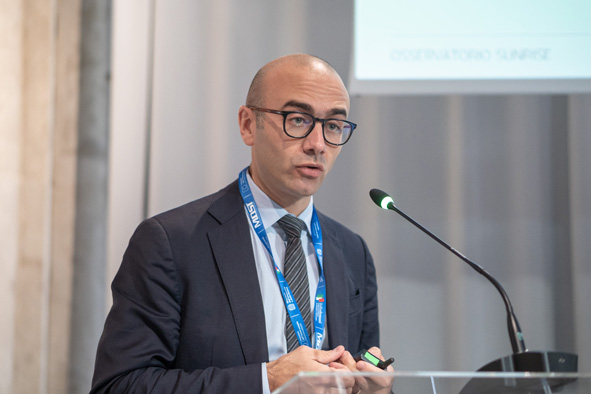
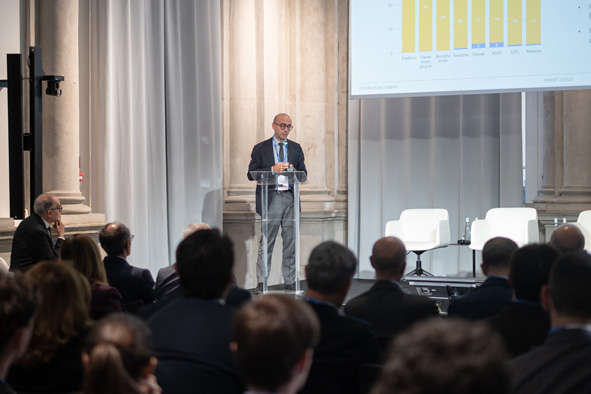
The contribution of the SESAM research group forms part of the activities of the SUNRISE Observatory, which develops analyses and scenarios to support the transition of road mobility in Italy towards more efficient and sustainable solutions.
For further information
Presentation of the third SUNRISE Report – 27 October 2026