From the IEA to the Department of Energy: Laura Cozzi Presents the World Energy Outlook 2025
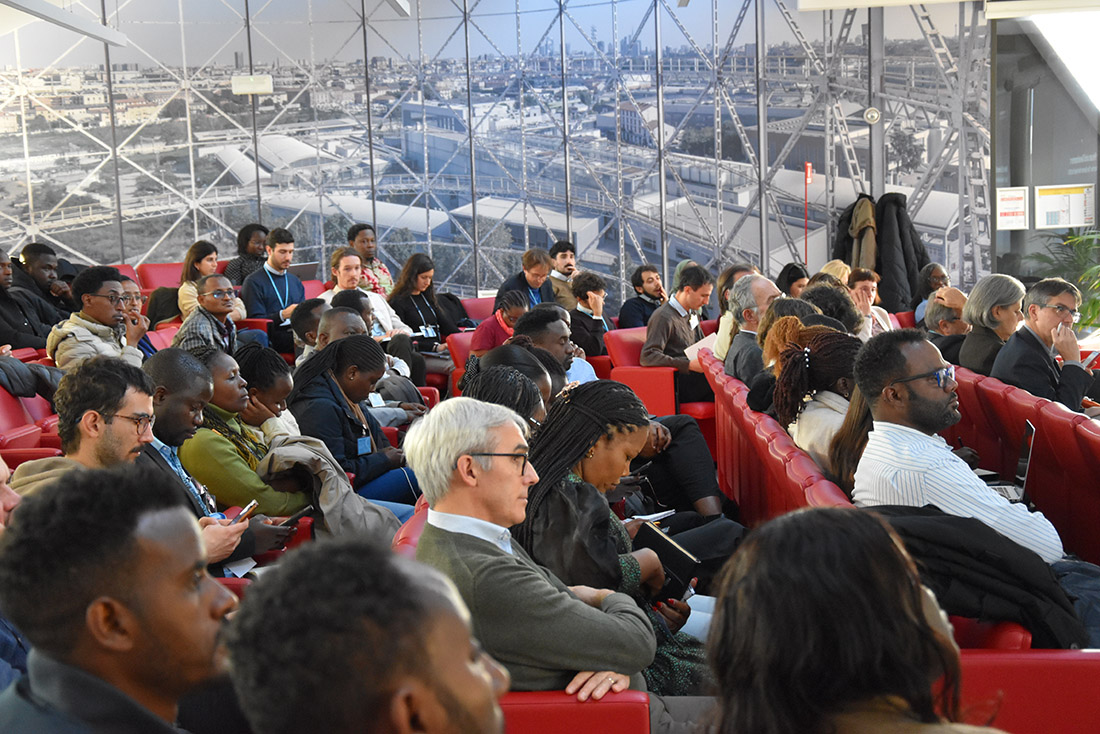
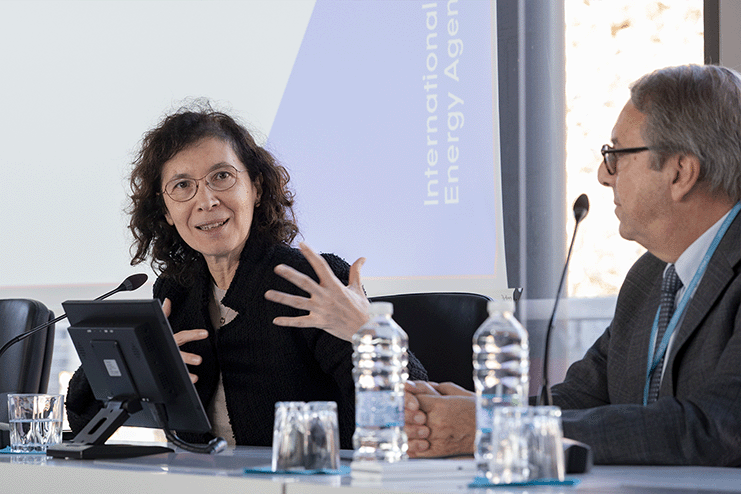
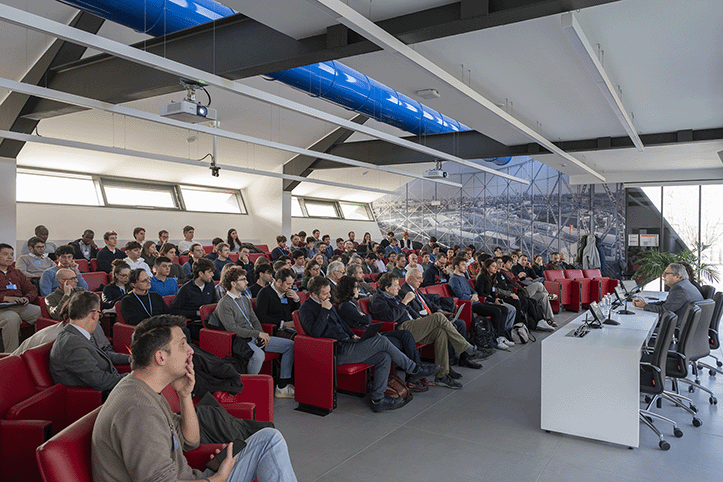
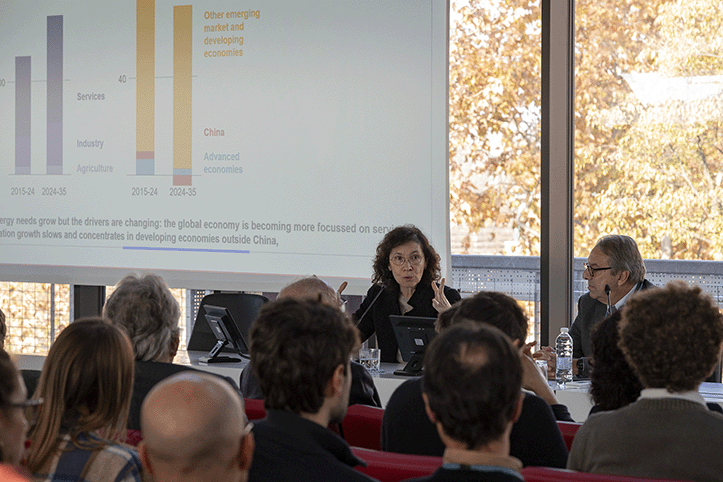
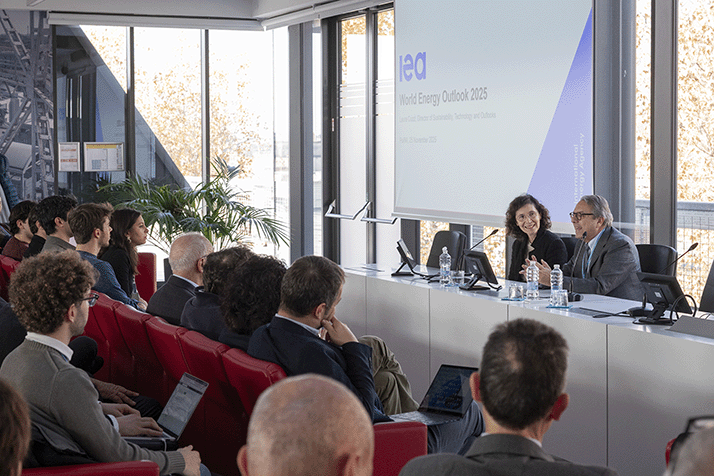
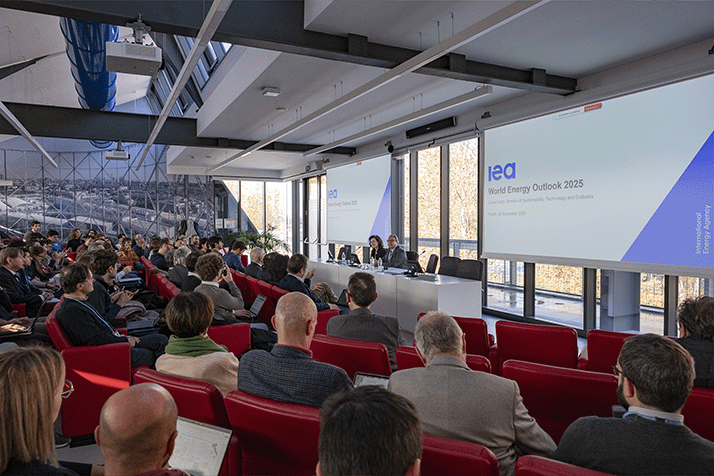
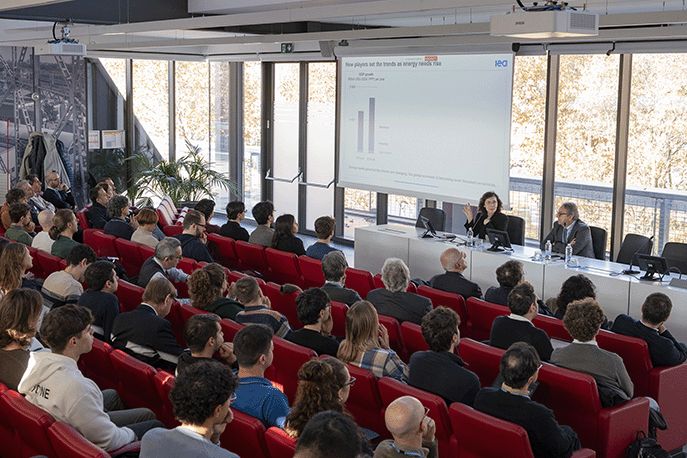
On 25 November, the Department of Energy hosted Laura Cozzi for the first Italian presentation of the World Energy Outlook 2025, the International Energy Agency’s (IEA) flagship publication on the evolution of global energy systems. The Department’s Council Room at EN:lab was packed: after her talk, Dr Cozzi answered numerous questions from the audience.
What the World Energy Outlook Is – and What It Is Not
In her presentation, Cozzi emphasised that the World Energy Outlook (WEO) is not a forecast, but an analysis based on data and existing energy policies that proposes alternative scenarios to explore possible pathways for the global energy system.
The WEO is updated annually to capture the most recent trends in technologies, markets, government policies and energy demand.
Key Messages from the Presentation
Among the points highlighted:
The era of electricity: in all scenarios, electricity demand increases, driven by electric vehicles, air conditioning, data centres and new digital applications. China already has the highest electrification rate (35%, compared to a global average of 20%).
Data centres and AI: their expansion is highly concentrated (45% in the USA, 40% in China, 15% in the EU) and creates significant challenges for electricity grids.
Clean technologies and China’s role: the sharp decline in the cost of solar panels and batteries—now 90% cheaper than a decade ago—is linked to China’s leadership, including investments in Asia and Africa. The oversupply of green technologies remains an open issue.
Liquefied natural gas (LNG): the United States is investing in new capacity at an unprecedented pace, while the trajectory of European demand remains uncertain.
Critical materials: energy security increasingly depends on diversifying supply chains for strategic minerals, which are currently marked by high geographic concentration.
Resilience and climate: following COP30, Cozzi stressed that all new infrastructure must be designed with resilience in mind.
All scenarios exceed the 1.5 °C threshold for at least several decades, even in the most ambitious one.
The Main WEO Scenarios
The World Energy Outlook 2025 uses several scenarios to analyse possible global trajectories:
CPS – Current Policies Scenario: provides a snapshot of the policies and regulations already in force and offers a generally cautious perspective on the speed at which new energy technologies can be deployed.
STEPS – Stated Policies Scenario: considers a broader range of policies, including those that have been formally proposed but not yet adopted, as well as other official strategy documents indicating the direction of travel. Barriers to introducing new technologies are lower than in the CPS, but this scenario does not assume that aspirational targets are met.
NZE – Net Zero Emissions by 2050 Scenario: maps out an updated global pathway for the energy sector to achieve net zero CO₂ emissions by 2050.
ACCESS Scenario – Accelerating Clean Cooking and Electricity Services: sets out a realistic roadmap to achieve universal access to electricity and clean cooking.
Across all scenarios, several common elements emerge: the central role of electricity, the growing importance of critical materials, rising climate risks and the expansion of renewables, accompanied by renewed interest in nuclear energy.
About Laura Cozzi
Since 2023, Dr Cozzi has served as Director of the Sustainability, Technology and Outlooks Directorate at the IEA, as well as Head of Energy Modelling and Co-Director of the WEO.
In 2025, she was awarded the title of Knight of the Order of Merit of the Italian Republic.
She is also a member of the French National Academy of Technologies, an Honorary Doctor of the Politecnico di Milano, and an Honorary Doctor of the KTH Royal Institute of Technology (2024).
Having joined the IEA in 1999, she previously worked at ENI. She holds a degree in Environmental Engineering from the Politecnico di Milano and a Master’s in Energy and Environmental Economics from Eni Corporate University.
In 2025, she was also awarded an Honorary Doctorate in Energy and Nuclear Science and Technology (STEN) by the Department of Energy of the Politecnico di Milano.
Executive summary → https://iea.li/487ZNUJ
Key findings → https://iea.li/4r2K7K0
Setting the scene → https://iea.li/4qYCUKW
Regional insights → https://iea.li/47FYUmh