APPEAL: New Smart, Edible Labels for the Agri-Food Sector from the Department of Energy
Reducing the environmental impact of agri-food packaging, improving the compostability of organic waste, and introducing new authentication and traceability features for the fruit and vegetable supply chain: these are the goals achieved by the APPEAL – Agrifood Protected by Printable Edible Authenticating Label project, funded by the Italian Fund for Applied Sciences (FISA) of the Ministry of University and Research and coordinated by Politecnico di Milano.
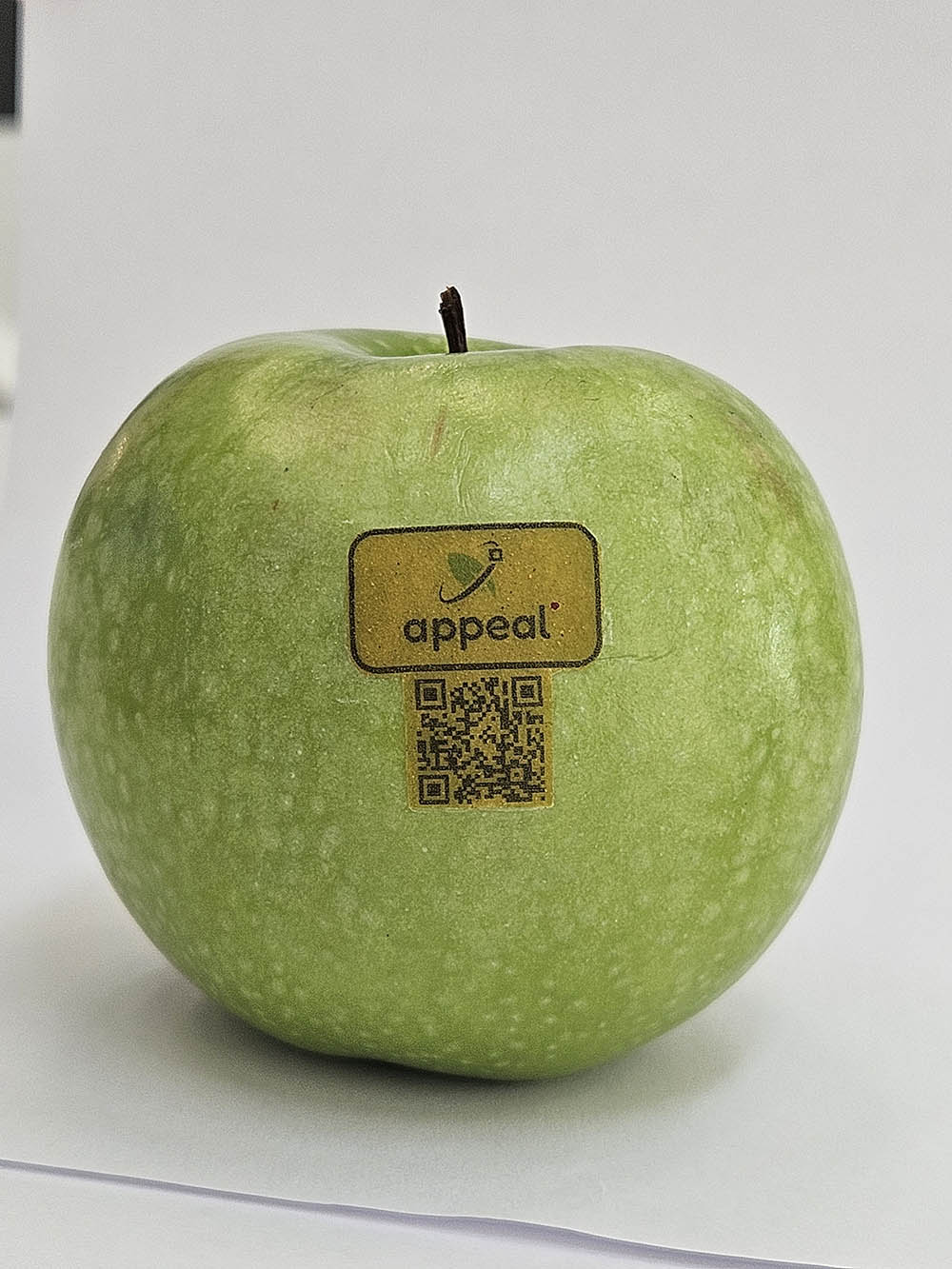
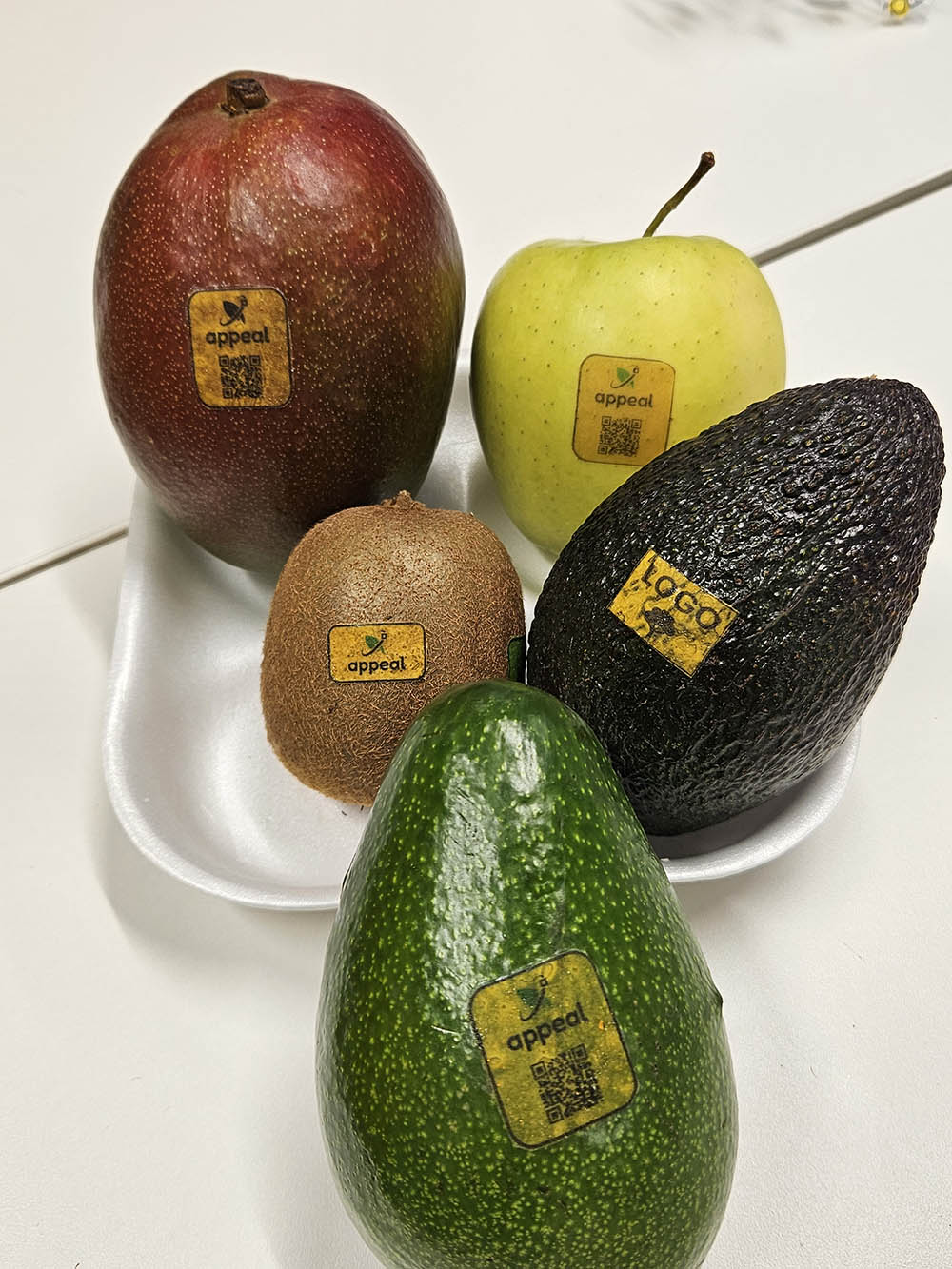
The project, led by Professor Carlo Spartaco Casari of the Department of Energy, has resulted in the development of a new generation of edible and compostable labels for fruit and vegetables, designed to replace the traditional plastic stickers used in the agri-food sector.
Advanced materials and circular bioeconomy
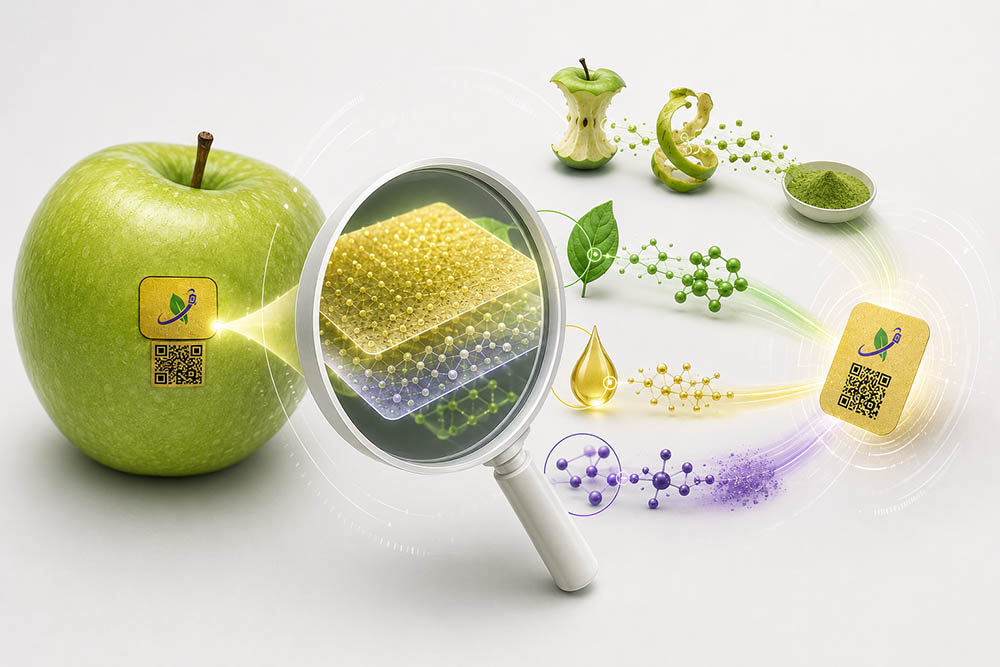
The technological core of the project is the development of multifunctional edible films made from biobased matrices based on polysaccharides and pectin, which is also recovered from apple processing by-products. The research has enabled the valorization of waste biomass in line with circular bioeconomy principles, transforming it into high-value materials for food-contact applications.
The research group at the Department of Energy, coordinated by Carlo Spartaco Casari and composed of Andrea Macrelli, Margherita Orazi, Anna Facibeni, Sonia Peggiani, and Alessandro Vidale, developed:
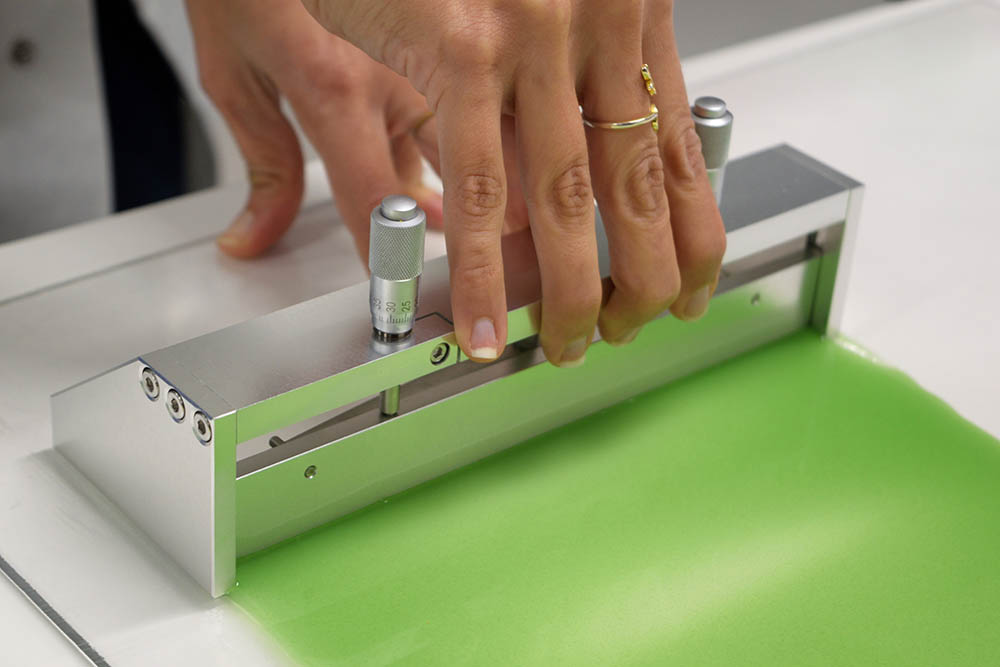
multilayer edible films;
water-based food-grade adhesives;
integrated optical authentication systems embedded within the material.
Particular attention was given to the compatibility between mechanical properties, surface adhesion, printability, and biodegradability, with the aim of producing a label capable of withstanding the operational conditions of the fruit and vegetable supply chain while maintaining food safety and compostability.
“The developed prototypes were designed to be not only edible, compostable, and safe, but also compatible with future regulatory and industrial requirements,” explains Andrea Macrelli, researcher at the Department of Energy. “The labels already comply with the objectives of the new EU Packaging and Packaging Waste Regulation (PPWR) and have been designed to be easily scalable for industrial processes.”
Food safety and multi-layer authentication
One of the most innovative aspects of the project is the integration of advanced authentication and traceability functions directly into the edible label.
The APPEAL technology in fact provides three different levels of information access:
a public level based on a QR code, readable by consumers via smartphone;
a verification level using UV illumination for rapid authenticity checks;
an advanced level accessible through dedicated optical instruments used by supply chain operators.
The first two levels are accessible and verifiable by any user, including end consumers, through a dedicated mobile application also developed within the project.
The goal is to strengthen protection against counterfeiting and improve transparency of information across the entire agri-food supply chain.
In parallel, the labels underwent in vitro biological testing to assess safety in case of accidental ingestion. Analyses, also performed after simulated digestion according to the INFOGEST protocol, showed high biocompatibility and an absence of cytotoxic, genotoxic, or immunotoxic effects.
The project was presented at TUTTOFOOD.
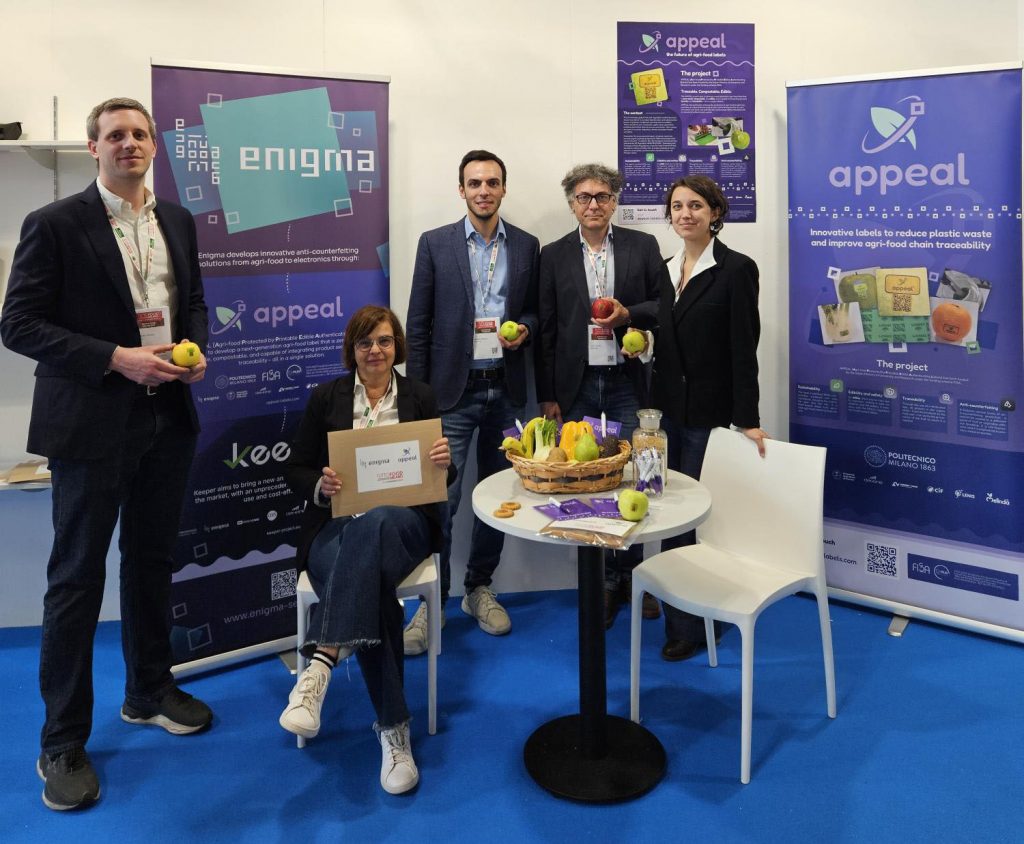
The team from the Department of Energy also participated in TUTTOFOOD, the leading Italian B2B trade fair dedicated to the international agri-food ecosystem, held at Rho Fiera Milano from May 11 to 14, 2026. During the event, which attracts thousands of industry professionals, buyers, and food & beverage companies from around the world, the research group presented the edible labels and the results of the APPEAL project at the stand of ENIGMA S.r.l., a startup and spin-off of Politecnico di Milano.
The booth offered a live demonstration of the developed prototypes, showcasing the material properties, multi-level authentication functionalities, and the industrial potential of the solution developed by the Politecnico di Milano for sustainable agri-food packaging.
From research to market
Tests conducted in collaboration with the Consorzio Melinda showed promising results in terms of mechanical strength, adhesion even under high-humidity conditions, biodegradability, and compostability.
“With APPEAL, we aimed to turn an environmental problem into a concrete opportunity for innovation,” comments Carlo Spartaco Casari, Full Professor of Condensed Matter Physics at Politecnico di Milano and Principal Investigator of the project. “The integration of sustainable materials, food safety, and authentication technologies opens new perspectives for advanced agri-food packaging.”
The project confirms the role of the Department of Energy in the development of functional materials and high-impact sustainable technologies, capable of combining advanced research, technology transfer, and industrial sustainability.
The project partners
APPEAL is developed by Politecnico di Milano together with seven scientific and industrial partners:
- Consorzio Melinda
- Università di Ferrara
- Consorzio Innovazione Frutta (CIF)
- Lenis S.r.l.
- Enigma S.r.l.
- Day One | Innovation Studio
- Looking for Value
The project is funded by the Italian Fund for Applied Sciences (FISA) of the Ministry of University and Research.