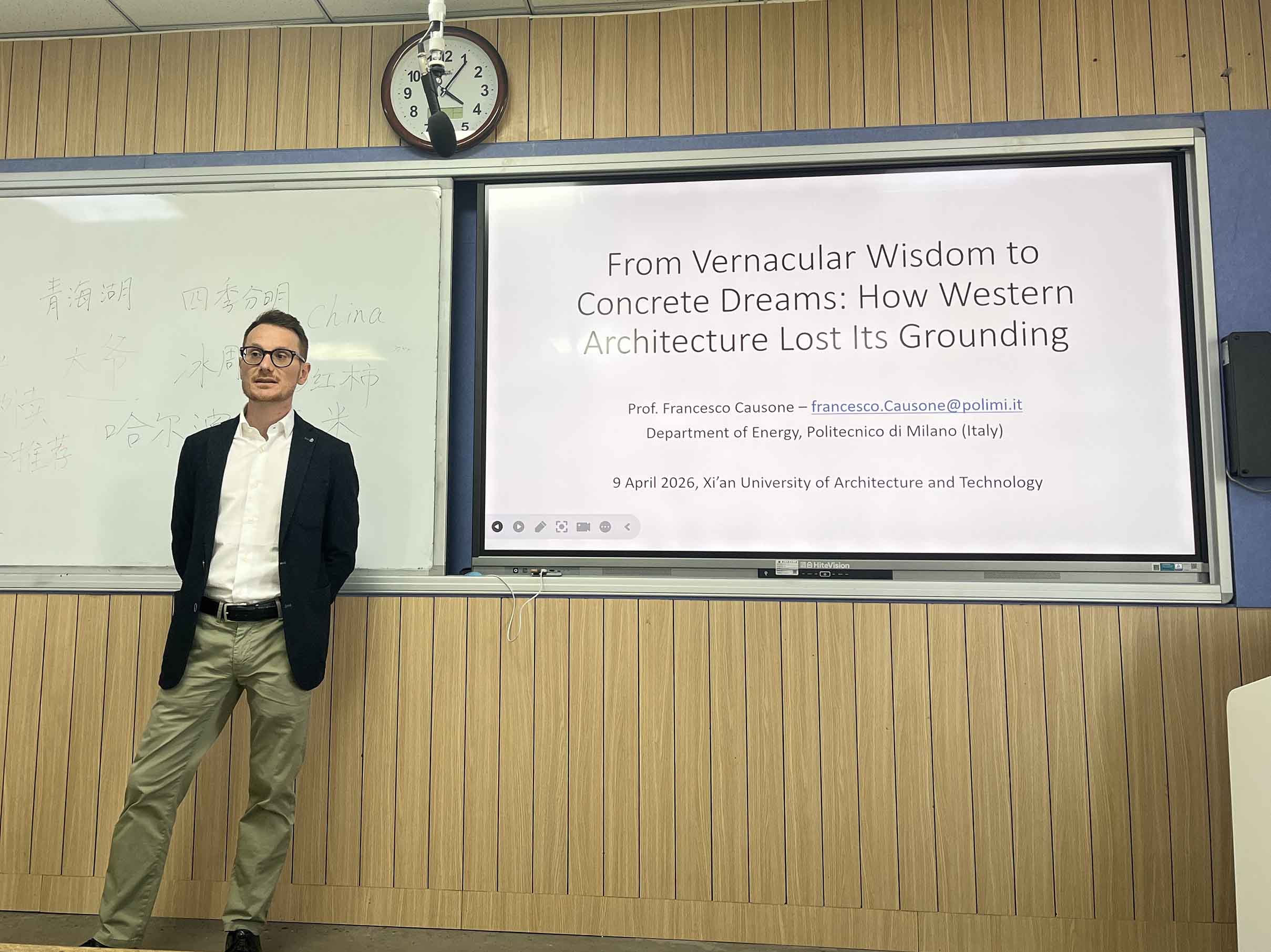
Francesco Causone Visiting Professor at Xi’an for activities on energy and decarbonisation policies
In the first half of April, Professor Francesco Causone, faculty member of the Department of Energy at Politecnico di Milano, served as Visiting Professor at Xi’an University of Architecture and Technology (XAUAT), one of China’s leading universities in Architecture and the Built Environment, within the framework of the Distinguished Scholars Collaboration Program on Low-Carbon Buildings and New Renewable Energy Technologies.
The visit, at the invitation of Professor He Quan — a former visiting researcher at the Department of Energy between May and November 2025 — confirms and further strengthens a growing scientific collaboration between the two institutions on topics related to energy efficiency and the decarbonisation of the building stock.
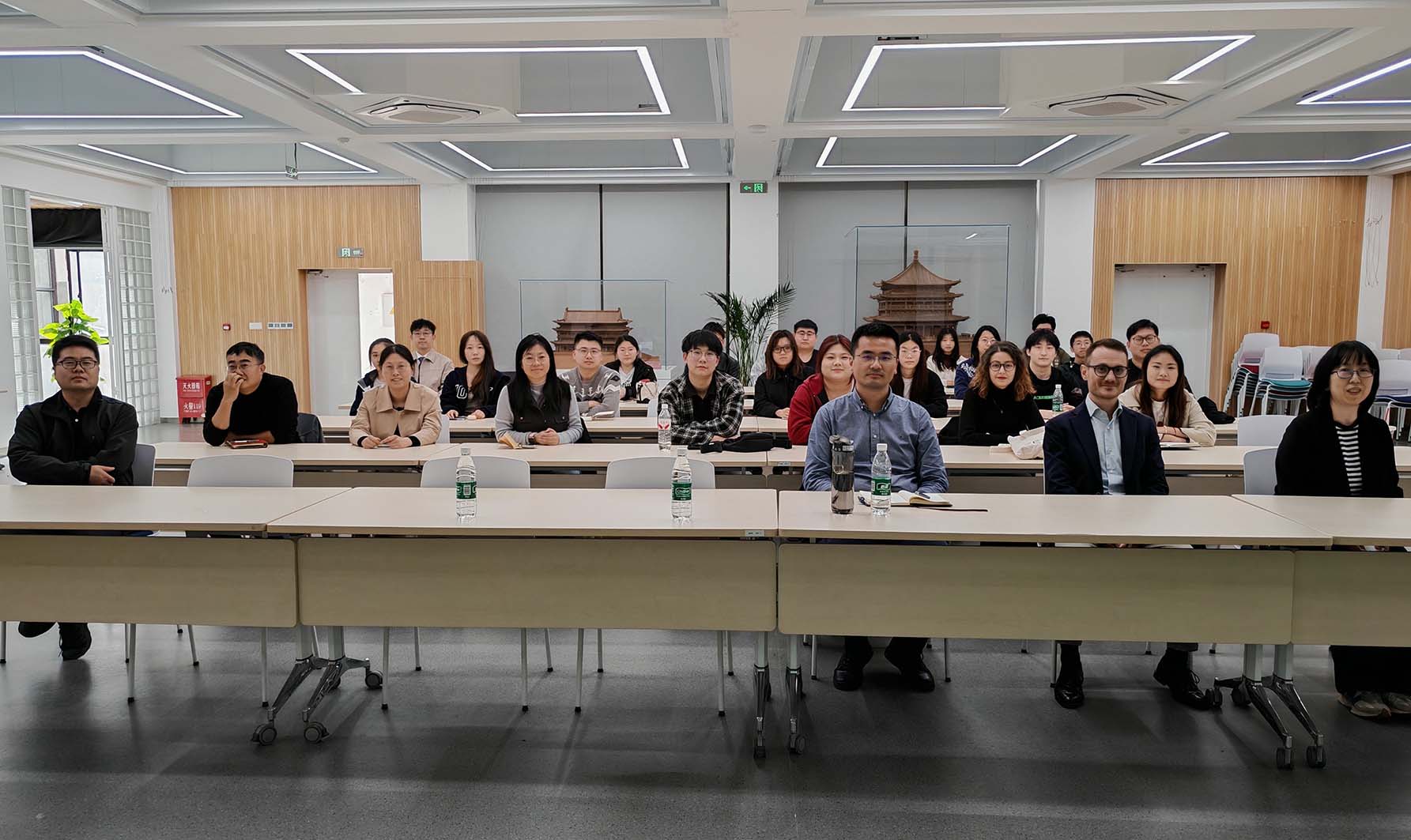
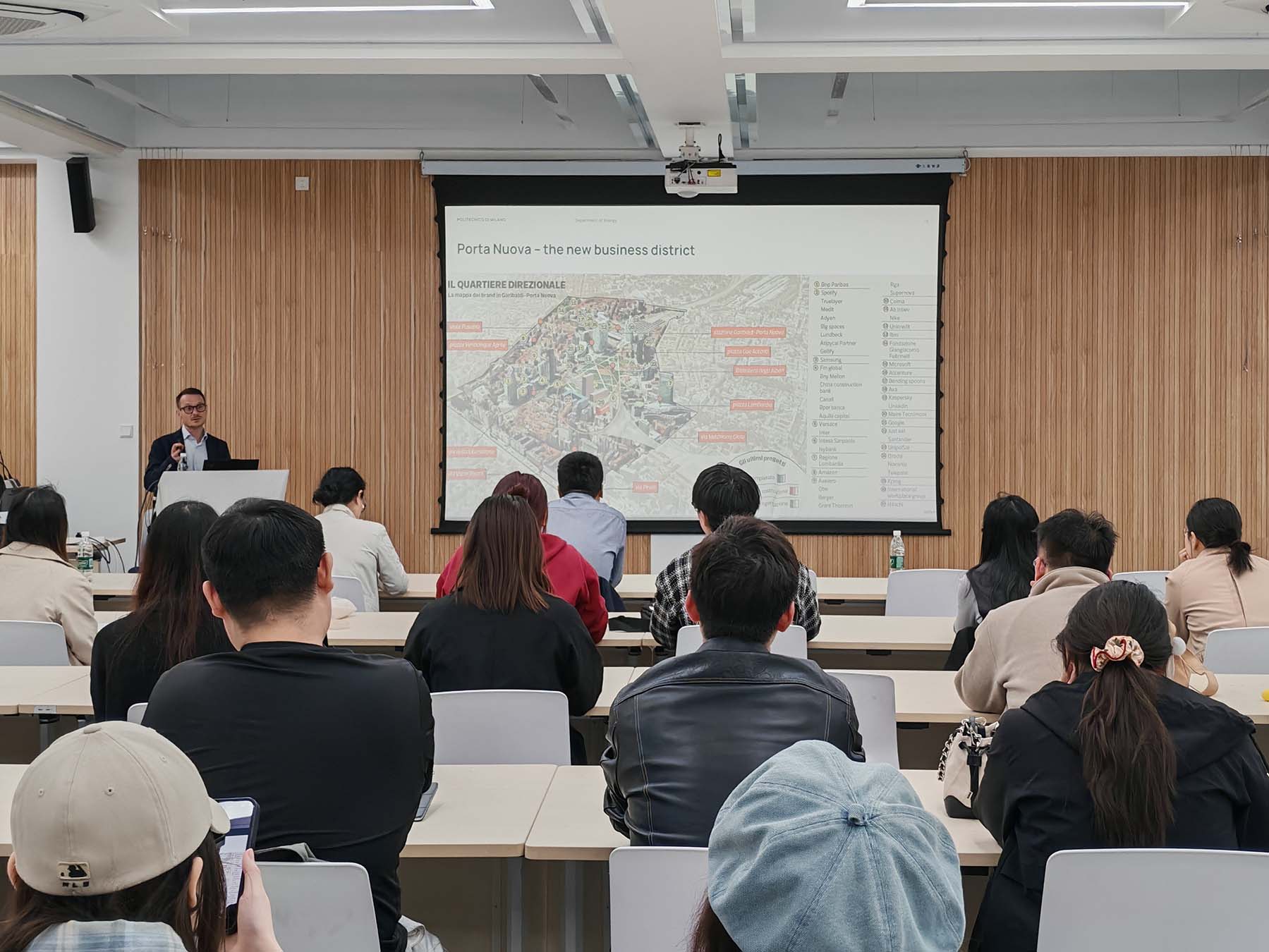
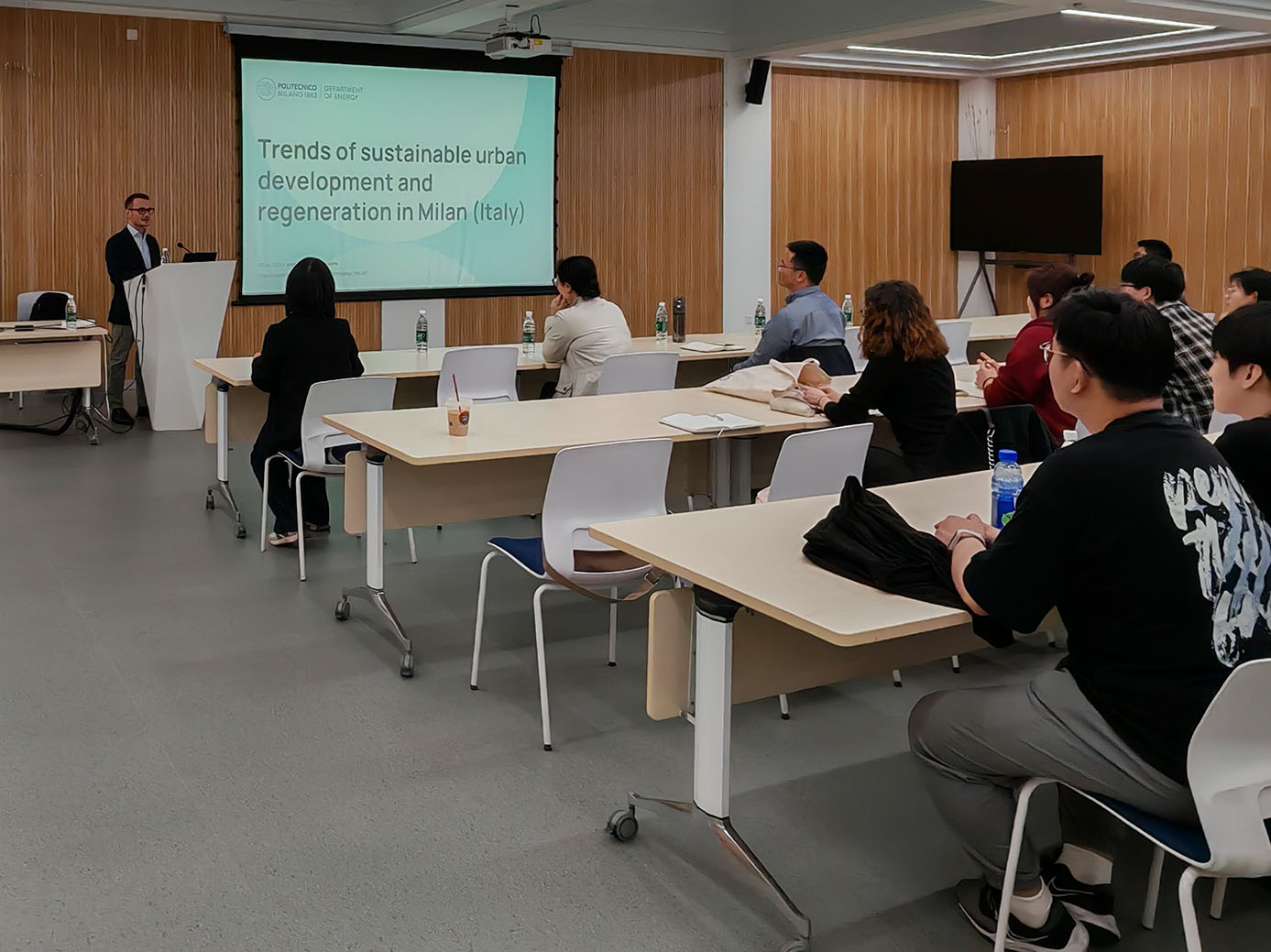
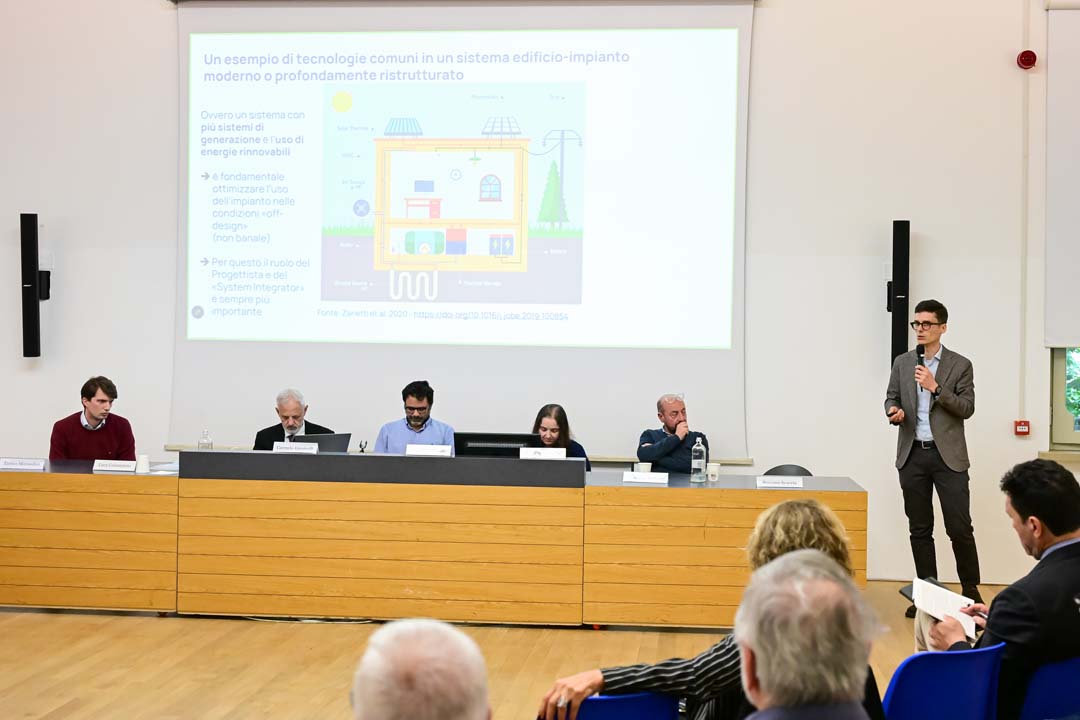
During his stay, Causone delivered seminars for faculty members and students, lectured within international Master’s programmes, and participated in thesis review activities on research topics related to energy, buildings, and cities.
As part of this collaboration, a research project is also currently underway at XAUAT involving a student from the Building Engineering for Sustainability programme at Politecnico di Milano, focusing on Building Carbon Policies. The work aims to develop a comparative framework between the European Union and China, two of the main global actors in scientific and economic investment in decarbonisation policies.
This initiative is part of a broader cooperation pathway involving the Department of Energy and several Chinese academic institutions, including Tongji University in Shanghai, with which long-standing collaboration has been established in research, scientific publications, and joint supervision of PhD candidates, including double-degree pathways and visiting programmes.
The comparison between different urban and territorial contexts — from the historic city of Xi’an to the post-industrial regeneration areas of Shanghai — enables the development of integrated approaches to the shared challenges of the energy transition, where energy efficiency, environmental sustainability, and the preservation of the built heritage are closely interconnected dimensions.
In this context, international collaborations represent a strategic asset for the Department of Energy and for the University, contributing to the development of advanced research and education on key topics for the energy transition.